A History of BIRMINGHAM Places & Placenames . . . from A to Y

William Dargue - A History of Birmingham Places & Placenames . . .  from A to Y


Key Hill

B18 - Grid reference SP059881

Kayes Hill: first record c1700

Key Hill CemeteryKey Hill Cemetery

Kayes Hill was named after a family who lived in the area before 1700. Sir Arthur Kaye was the husband of Anne Marrow, one of the co-heiresses of  Birmingham manor who sold the manor to Thomas Archer of Umberslade in 1746. 
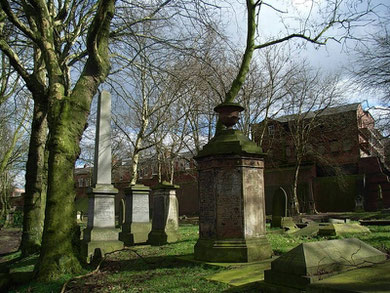
 

The General Cemetery

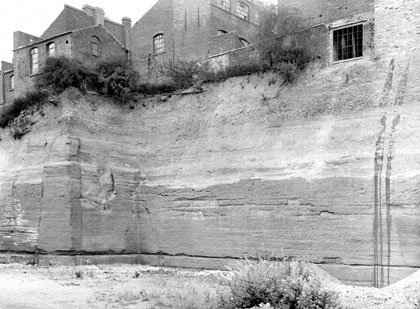
Key Hill is now known for the cemetery which was opened by the Birmingham General Cemetery Company in 1836 on the site of the former sandpits. Generally known as Key Hill Cemetery, this was Birmingham's first public cemetery and served for people not wishing to be buried in an Anglican cemetery.


The mortuary chapel resembled a classical temple in the Greek Doric order; it was demolished in 1966.


The cemetery was taken over by the City in 1952 and is Grade II Listed in the Register of Parks and Gardens of Special Historic Interest. It lies within the Jewellery Quarter Conservation Area.


See also  Mount Misery. 
 

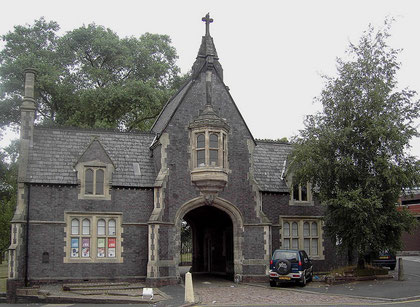
Warstone Lane Cemetery lodgeWarstone Lane Cemetery lodge

The Church of England Cemetery nearby was opened in Warstone Lane twelve years later also on the site of former sandpits. Burial plots in the town centre churchyards were increasingly hard to come by and the cemetery was set up as a commercial venture by the Birmingham Church of England Cemetery Company.


The cemetery lodge which is now in use as offices and the semi-circle of catacombs were designed by James Hamilton, the architect of St Michael & All Angels which stood behind the catacombs on Vyse Street. The church closed a few years later but was reopened in 1869 as the cemetery chapel. As a result of severe bomb damage during World War 2, the church was demolished in 1953.

The City took over the cemetery in 1951 and the former Key Hill Methodist chapel was then used as a non-denominational cemetery chapel. The most notable resident is John Baskerville who was reburied here after Christ Church was demolished in 1898. The City bought the cemetery in 1952 and it was closed for burials in 1982.


Take a look. The Key Hill area has a good number of early Victorian buildings including the Duke of York public house on Great Hampton Street. This was probably a house built c1800 and altered c1850 as a pub. On Hockley Street is the Jewellers Arms, a public house of c1840 with carriage arch.


On Vyse Street stands a rare survival - a cast-iron gentlemen's public convenience which was erected here in 1883 and is believed to have been made in Glasgow.


The Birmingham MintThe Birmingham Mint

Take a look at the Birmingham Mint.
On Icknield Street stand the former buildings of the Birmingham Mint with a long frontage along Icknield Street. It is built in italianate style with three storeys around a central yard. Founded in 1794 in Slaney Street (near Weaman Street in the City Centre, but now gone) by brassfounder and button-maker Ralph Heaton I to make medals.


In 1851 Ralph Heaton II bought the Soho Manufactory minting machinery from Matthew Boulton at auction and began to mint coins. So successful was the business minting British and foreign coins that the large Icknield Street site was bought and developed by 1862.


That same year Ralph Heaton III took over and installed new machinery giving an even greater capacity than the Royal Mint in London, and subsequently taking on subcontracts from that mint. By the 1890s the Mint was producing for Russia alone over 100 million coins annually. The Mint was set up as a public company by Ralph III; Ralph IV became the managing director in 1891.


In 1911 the Mint lost the monopoly with the Royal Mint and shared the contract with the Kings Norton Metal Company. The latter was later to become part of IMI who bought out the Mint. After World War 2 the Mint diversified into button, badge- and medal-making, pressing, die-making, and electro-precision work. During the 1990s the Mint bought other minting companies and was itself subject to take-overs.


In 2000 The Birmingham Mint secured its biggest ever single order worth over £45 million supplying the German mints with 1- and 2-Euro coin blanks and a further 50 million 2-Euro coins for another national mint. However, the Mint went into liquidation in 2003 was acquired by J F T Law & Co with Stirchley Machine Tools Ltd. Now largely involved in badge and medal making, their premises are on the Tyburn Road near Erdington.


See also Hockley.


Click to enlarge the images in the Key Hill Gallery below.


William Dargue 17.03.09


Google Maps - If you lose the original focus of the Google map, press function key F5 on your keyboard to refresh the screen. The map will then recentre on its original location.

For 19th-century Ordnance Survey maps of Birmingham go to British History Online - Maps.